
Understanding leptin resistance is one thing. Actually managing leptin day-to-day is another. These five rules come from the research and from watching what works in practice — both in my own experience and in the experience of others following the NKFB protocol.
None of them is complicated. All of them require consistency.
Rule 1: Reduce Carbohydrates Enough to Lower Insulin Chronically
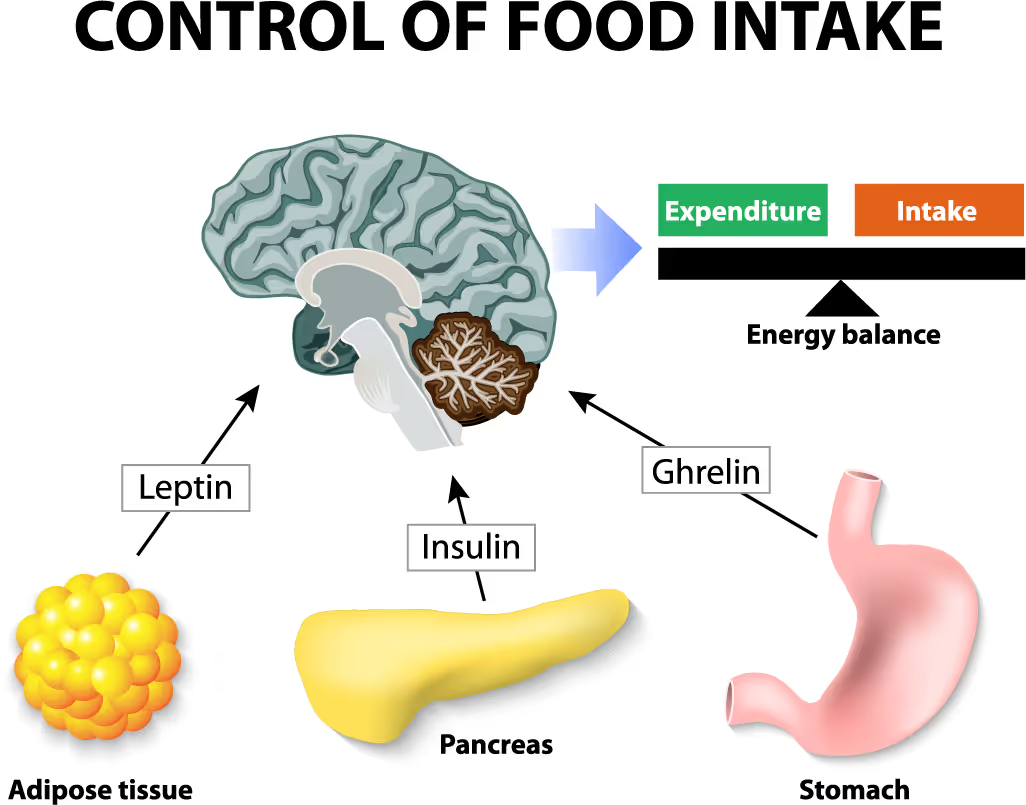
Leptin resistance is driven in large part by chronically elevated insulin. High insulin promotes inflammation in the hypothalamus — the brain region where leptin signals are received and processed. Until insulin is brought down, the brain remains partially deaf to leptin's message.
The threshold is different for different people. For many, reducing net carbohydrates to under 50g per day is enough to see significant change within two to four weeks. For others with more advanced insulin resistance, stricter reduction may be necessary initially.
The key word is chronic. A few days of low carbs does not reverse years of leptin resistance. Consistency over weeks and months is what allows the signalling to repair.
Rule 2: Eat Two or Three Meals. Stop Snacking.
Every time you eat, insulin is released — even if what you eat is low-carbohydrate. Frequent eating keeps insulin elevated throughout the day, preventing the fasting periods in which insulin normalises and leptin sensitivity has a chance to improve.
Two or three meals per day, with nothing in between, gives the body extended periods of low insulin. Many people on the NKFB protocol naturally move toward two meals once they are fat-adapted, because hunger between meals disappears. Do not force this — let it happen as adaptation progresses.
Rule 3: Protect Sleep Like a Priority
Leptin is produced primarily during sleep. Sleep deprivation — even a single night of four to five hours — measurably reduces leptin and raises ghrelin (the hunger hormone). The result is increased appetite the following day, a preference for high-carbohydrate foods, and reduced metabolic rate.
This is not a marginal effect. Studies show that sleep-deprived individuals consume an average of 300-500 additional calories per day compared to well-rested controls. You cannot out-diet poor sleep.
Seven to nine hours of quality sleep is not a luxury. It is a metabolic requirement.
Rule 4: Manage Cortisol
Cortisol — the primary stress hormone — directly suppresses leptin production and sensitises the brain to reward signals from food, particularly sugar and fat combinations. Chronic stress creates a physiological drive toward the foods most likely to disrupt metabolic function.
The Quiet Mind meditation guide in the NKFB programme addresses this directly. Stress management is not soft advice. It is a concrete hormonal intervention. Even fifteen minutes of daily meditation has measurable effects on cortisol levels over time.
Rule 5: Move Daily, But Do Not Overtrain
Moderate regular movement — walking, swimming, cycling, weight training — improves insulin sensitivity, which indirectly supports leptin function. It also reduces inflammation over time.
Intense chronic overtraining, however, elevates cortisol chronically and can suppress leptin. More is not always better. The goal is consistent, sustainable movement — not exhaustion as a means of burning calories.
A daily walk of 30 to 45 minutes, combined with two or three resistance sessions per week, is enough for most people to see metabolic benefit without the cortisol cost of excessive training.
Putting It Together
These five rules address leptin from multiple angles simultaneously: dietary, hormonal, sleep, stress, and movement. No single rule is sufficient on its own. Together, they create the conditions in which leptin resistance reverses and the body's natural appetite regulation comes back online.
The timeline varies. Most people see meaningful change in appetite and energy within four to six weeks of applying all five consistently. Some see it faster. Some take longer. What matters is not the pace — it is the direction.